The Ten Companions Promised Paradise: Who They Were and What They Left Us
In this article · 7
The ten Companions promised Paradise are ten men the Prophet ﷺ named together, in one hadith, as people of Paradise: Abu Bakr al-Siddiq, Umar ibn al-Khattab, Uthman ibn Affan, Ali ibn Abi Talib, Talha ibn Ubaydillah, al-Zubayr ibn al-Awwam, Abd al-Rahman ibn Awf, Sa'd ibn Abi Waqqas, Sa'id ibn Zayd and Abu Ubayda ibn al-Jarrah. May Allah be pleased with them all.
In Arabic they are al-Ashara al-Mubashshara, the ten Sahaba given the good news of Jannah. This page gives the hadith and its grade, three diagrams, each of the ten in a few lines, and what they handed down about the prayer.
The First Forerunners in the Qur'an
Before the Sunnah names anyone, the Qur'an speaks of their whole generation.
وَٱلسَّـٰبِقُونَ ٱلْأَوَّلُونَ مِنَ ٱلْمُهَـٰجِرِينَ وَٱلْأَنصَارِ وَٱلَّذِينَ ٱتَّبَعُوهُم بِإِحْسَـٰنٍ رَّضِىَ ٱللَّهُ عَنْهُمْ وَرَضُوا۟ عَنْهُ وَأَعَدَّ لَهُمْ جَنَّـٰتٍ تَجْرِى تَحْتَهَا ٱلْأَنْهَـٰرُ خَـٰلِدِينَ فِيهَآ أَبَدًا ۚ ذَٰلِكَ ٱلْفَوْزُ ٱلْعَظِيمُ
And the first forerunners [in the faith] among the Muhājireen and the Anṣār and those who followed them with good conduct - Allāh is pleased with them and they are pleased with Him, and He has prepared for them gardens beneath which rivers flow, wherein they will abide forever. That is the great attainment.
All ten believed in Mecca, years before the Hijra, and all left their homes for Medina. They are among the first of the Emigrants, the Muhajirun the verse speaks of. It promises them the pleasure of Allah (SWT) and gardens; the hadith then names ten of them, one by one.
The Hadith That Names the Ten
Abd al-Rahman ibn Awf, himself one of the ten, narrates that the Prophet ﷺ said:
"Abu Bakr is in Paradise, Umar is in Paradise, Uthman is in Paradise, Ali is in Paradise, Talha is in Paradise, al-Zubayr is in Paradise, Abd al-Rahman ibn Awf is in Paradise, Sa'd is in Paradise, Sa'id is in Paradise, and Abu Ubayda ibn al-Jarrah is in Paradise."
That is Jami' at-Tirmidhi 3747, graded sahih. Sa'id ibn Zayd, another of the ten, narrates it too: Jami' at-Tirmidhi 3748, Sunan Abi Dawud 4649 and Sunan Ibn Majah 133, each graded sahih. At-Tirmidhi adds that the chain through Sa'id is the sounder of the two.
You may meet a list that looks different. In Sa'id's narration as Abu Dawud and Ibn Majah record it, the Prophet ﷺ himself is counted among the ten, and Abu Ubayda is not named. At-Tirmidhi's narrations name Abu Ubayda. Ibn Abd al-Barr noted long ago that nine names never change. The list everyone learns is at-Tirmidhi's.
Sa'id retold the hadith in the mosque of Kufa, on hearing a man insult Ali. He rebuked his host for letting Companions of the Prophet ﷺ be insulted in his presence, then told the hadith.
He added, in his own words: one stand of any one of them beside the Messenger of Allah ﷺ, in which that man's face was covered in dust, is better than the deeds of a whole life of one of you, even a life as long as Nuh's (Sunan Abi Dawud 4650, graded sahih).
They are not the only ones. Sound hadith promise Paradise to others by name: Khadija, with the news of a house in Paradise (Sahih al-Bukhari 3820); Bilal, the sound of whose sandals the Prophet ﷺ heard ahead of him in Paradise (Sahih al-Bukhari 1149); and Ukkasha ibn Mihsan, told "You are one of them", the seventy thousand who enter Paradise without reckoning (Sahih Muslim 220).
So was Abdullah ibn Salam (Sahih al-Bukhari 3812). Al-Hasan and al-Husayn are "masters of the youth of the people of Paradise" (Jami' at-Tirmidhi 3768, graded sahih), and of those who pledged under the tree, none will enter the Fire, if Allah wills (Sahih Muslim 2496). These ten are called "the ten" because they were named together in a single hadith.
One Family Tree
All ten are of Quraysh, from seven of its clans. Trace each one's fathers back and his line meets the Prophet's ﷺ own.
Ali is nearest: he joins at the second forefather, Abd al-Muttalib, the grandfather he shares with the Prophet ﷺ. Uthman joins at Abd Manaf, al-Zubayr at Qusayy, Abd al-Rahman and Sa'd at Kilab, Abu Bakr and Talha at Murra, Umar and Sa'id at Ka'b. Abu Ubayda joins at Fihr, the eleventh forefather, at whom, in Ibn Sa'd's phrase, all of Quraysh comes together.
Some ties are closer than the tree shows. Abu Bakr and Umar were the fathers of Aisha and Hafsa, wives of the Prophet ﷺ. Uthman married the Prophet's ﷺ daughter Ruqayya, then, after her death, her sister Umm Kulthum: hence his name Dhul-Nurayn, "the man of the two lights".
Ali was the Prophet's ﷺ first cousin and the husband of his daughter Fatima. Al-Zubayr was the son of the Prophet's ﷺ aunt Safiyya. Sa'd and Abd al-Rahman were of Banu Zuhra, the clan of the Prophet's ﷺ mother, Amina.
The Ten, One by One
In figures: 10 Companions named in one hadith, from 7 clans of Quraysh; 5 came to Islam through Abu Bakr, as Ibn Ishaq relates; 4 became caliphs; and the last death among them came in 55 AH, counting from the Hijra.
Abu Bakr al-Siddiq
On the Hijra he was the Prophet's ﷺ companion in the cave, "the second of two" (Qur'an 9:40). The Prophet ﷺ said: "If I were to take an intimate friend other than my Lord, I would take Abu Bakr" (Sahih al-Bukhari 3654). First caliph, he died in Medina in 13 AH and was buried beside the Prophet ﷺ.
Umar ibn al-Khattab
The Prophet ﷺ said: "Among the nations before you were people who were inspired; if there is one in my nation, it is Umar" (Sahih al-Bukhari 3689). Second caliph, he was stabbed one morning after he had straightened the rows and said the opening takbir (Sahih al-Bukhari 3700), in Medina, at the end of 23 AH. He lies beside the Prophet ﷺ and Abu Bakr.
Uthman ibn Affan
The Prophet ﷺ said of him: "Should I not be shy before a man before whom the angels are shy?" (Sahih Muslim 2401). He was away from Badr because the Prophet ﷺ had left him in Medina with Ruqayya, who was ill. Third caliph, he was killed in Medina in 35 AH.
Ali ibn Abi Talib
He believed as a boy. Setting out for Tabuk, the Prophet ﷺ left him behind as his deputy and said: "Are you not pleased to be to me as Harun was to Musa, except that there is no prophet after me?" (Sahih al-Bukhari 4416; Sahih Muslim 2404). Fourth caliph, he was struck down in Kufa on his way to Fajr, in Ramadan 40 AH.
Talha ibn Ubaydillah
Ibn Ishaq counts him among the five who came to Islam through Abu Bakr, his clansman. Qays ibn Abi Hazim said: "I saw Talha's hand, paralysed: he had protected the Prophet ﷺ with it on the day of Uhud" (Sahih al-Bukhari 4063). He was killed in 36 AH near Basra, on the day of the Camel.
Al-Zubayr ibn al-Awwam
A nephew of Khadija, he believed very young. The Prophet ﷺ said: "Every prophet has a disciple, and my disciple is al-Zubayr" (Sahih al-Bukhari 3719; Sahih Muslim 2415). He was killed in 36 AH at Wadi al-Siba', near Basra, after he had left the battlefield.
Abd al-Rahman ibn Awf
He emigrated to Abyssinia, then to Medina. When Umar was stabbed, he took Abd al-Rahman by the hand and put him forward, and Abd al-Rahman finished the prayer for the people, keeping it short (Sahih al-Bukhari 3700). He died in Medina in 32 AH, by the better-known account, and was buried in al-Baqi'.
Sa'd ibn Abi Waqqas
At Uhud the Prophet ﷺ emptied his quiver before him and said: "Shoot, may my father and mother be your ransom" (Sahih al-Bukhari 4055; Sahih Muslim 2411). He died at al-Aqiq, near Medina, in 55 AH by the best-known account, the last of the ten to die, and was buried in al-Baqi'.
Sa'id ibn Zayd
The husband of Umar's sister Fatima, he believed before Umar. He said in the mosque of Kufa that Umar used to bind him for his Islam, before Umar himself became Muslim (Sahih al-Bukhari 3862). He died at al-Aqiq in 50 or 51 AH and was carried to Medina and buried there.
Abu Ubayda ibn al-Jarrah
The Prophet ﷺ said: "Every nation has a trustworthy man, and ours, O nation, is Abu Ubayda ibn al-Jarrah" (Sahih al-Bukhari 3744; Sahih Muslim 2419). Hence his title, the trustworthy one of this nation. He died of the plague of Amwas in 18 AH, at Fihl in the Jordan valley.
Fifty-Five Years on One Line
Here are the same lives on one line of time, from the Hijra to the death of the last of the ten.
Abu Bakr was the first of them to die, in 13 AH, two years after the Prophet ﷺ. Sa'd was the last, in 55 AH, forty-four years after the Prophet ﷺ.
Four of the ten led the community one after another, from 11 to 40 AH: Abu Bakr, Umar, Uthman, Ali. Three of the four were killed.
On his deathbed Umar named six men to choose his successor from among themselves, saying that the Messenger of Allah ﷺ had died pleased with them: Ali, Uthman, al-Zubayr, Talha, Sa'd and Abd al-Rahman (Sahih al-Bukhari 3700). All six are of the ten. Abu Ubayda had died five years earlier.
Talha and al-Zubayr were both killed in 36 AH near Basra, after the killing of Uthman: Talha on the day of the Camel, al-Zubayr after he had left it.
How the scholars of Ahl al-Sunnah speak of the Companions is in al-Tahawi's creed: "We love the Companions of the Messenger of Allah ﷺ. We do not go to excess in love of any one of them, and we disown none of them [...] and we speak of them only with good."
What They Left in Our Prayer
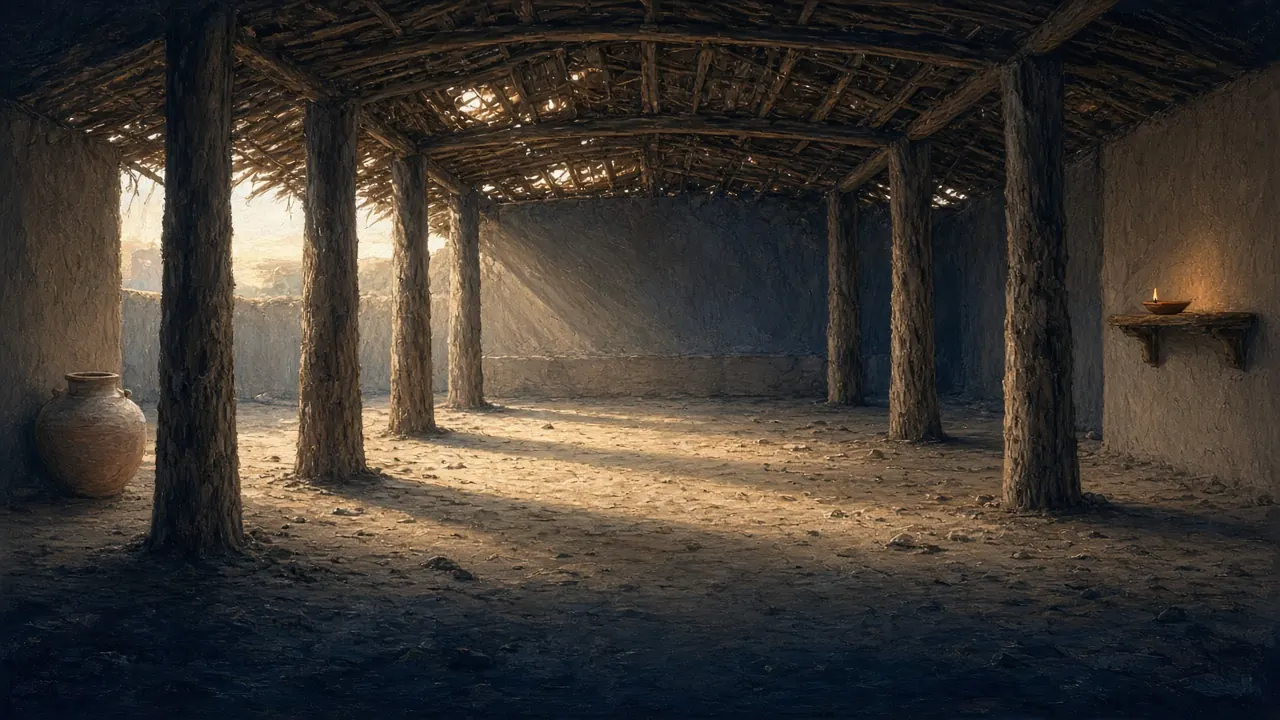
Ibn Umar describes the mosque they prayed in. In the Prophet's ﷺ time it was built of mud brick, its roof of palm branches, its pillars of palm trunks. Abu Bakr added nothing to it. Umar enlarged it and rebuilt it as it had been. Uthman rebuilt it larger, in carved stone, with a roof of teak (Sahih al-Bukhari 446).
Three of the ten, one after another, had that mosque in their care.
Here is what seven of them left us.
- Abu Bakr. When his illness grew severe, the Prophet ﷺ said: "Tell Abu Bakr to lead the people in prayer" (Sahih al-Bukhari 678).
- Umar. One night in Ramadan he found people praying scattered in the mosque and gathered them behind one reciter, Ubayy ibn Ka'b, for what we now call Taraweeh (Sahih al-Bukhari 2010).
- Uthman. He performed wudu before his freed slave Humran and said he had seen the Prophet ﷺ perform it as he had just done (Sahih al-Bukhari 164; Sahih Muslim 226). When Medina had grown, he added a third call for the Friday prayer (Sahih al-Bukhari 912).
- Ali. On the prayer from start to finish, he narrates from the Prophet ﷺ: "The key to prayer is purification; the takbir begins it and the tasleem ends it" (Sunan Abi Dawud 61, graded hasan sahih by al-Albani).
- Talha. He narrates how the Prophet ﷺ told a man from Najd of the five daily prayers: "Five prayers in the day and the night." "Do I owe any others?" "No, unless you offer more of your own accord" (Sahih al-Bukhari 46; Sahih Muslim 11).
- Abd al-Rahman. On the Tabuk expedition the people put him forward for Fajr. The Prophet ﷺ arrived, prayed one rak'ah behind him, completed his prayer, and told them they had done well: he was glad they had prayed Fajr at its time (Sahih Muslim 274).
- Sa'd. Accused by the people of Kufa of not praying well, he answered Umar that he prayed with them the prayer of the Messenger of Allah ﷺ: long in the first two rak'ahs, lighter in the last two (Sahih al-Bukhari 755; Sahih Muslim 453).
Guarding each prayer at its time is the habit Deeny is built for. It shows the prayer times where you are and keeps a log of each prayer: on time, late or missed.
Frequently Asked Questions
Who are the ten Companions promised Paradise?
They are Abu Bakr, Umar, Uthman, Ali, Talha, al-Zubayr, Abd al-Rahman ibn Awf, Sa'd ibn Abi Waqqas, Sa'id ibn Zayd and Abu Ubayda ibn al-Jarrah. The Prophet ﷺ named them together as people of Paradise in one hadith (Jami' at-Tirmidhi 3747, graded sahih).
Is the hadith of the ten promised Paradise authentic?
Yes. The hadith of the ten is graded sahih. Two of the ten themselves narrate it: Abd al-Rahman ibn Awf (Jami' at-Tirmidhi 3747) and Sa'id ibn Zayd (Jami' at-Tirmidhi 3748; Sunan Abi Dawud 4649; Sunan Ibn Majah 133).
Were only ten Companions promised Paradise?
No. Others were promised Paradise too, among them Khadija (Sahih al-Bukhari 3820), Bilal (Sahih al-Bukhari 1149) and those who pledged under the tree (Sahih Muslim 2496). These ten are called "the ten" because they were named together in a single hadith.
Why do some narrations count the Prophet ﷺ among the ten?
Because one sound narration words it that way. In Sunan Abi Dawud 4649, graded sahih, Sa'id ibn Zayd, himself one of the ten, gives the list with the Prophet ﷺ counted first and without Abu Ubayda. The narrations in Jami' at-Tirmidhi name Abu Ubayda instead. The other nine names are the same in every narration.
Who was the last of the ten promised Paradise to die?
Sa'd ibn Abi Waqqas. He died at al-Aqiq, near Medina, in 55 AH by the best-known account, and was buried in al-Baqi'.
The Prophet ﷺ said: "Do not revile my Companions" (Sahih al-Bukhari 3673). What is asked of those who came after them is in the Qur'an itself, as a prayer anyone can say tonight:
وَٱلَّذِينَ جَآءُو مِنۢ بَعْدِهِمْ يَقُولُونَ رَبَّنَا ٱغْفِرْ لَنَا وَلِإِخْوَٰنِنَا ٱلَّذِينَ سَبَقُونَا بِٱلْإِيمَـٰنِ وَلَا تَجْعَلْ فِى قُلُوبِنَا غِلًّا لِّلَّذِينَ ءَامَنُوا۟ رَبَّنَآ إِنَّكَ رَءُوفٌ رَّحِيمٌ
And [there is a share for] those who come after them, saying, 'Our Lord, forgive us and our brothers who preceded us in faith and put not in our hearts [any] resentment toward those who have believed. Our Lord, indeed You are Kind and Merciful.'
Sources named in this article
- Qur'an 9:100
- Qur'an 9:40
- Qur'an 59:10
- Jami' at-Tirmidhi 3747
- Jami' at-Tirmidhi 3748
- Sunan Abi Dawud 4649
- Sunan Ibn Majah 133
- Sunan Abi Dawud 4650
- Sahih al-Bukhari 3820
- Sahih al-Bukhari 1149
- Sahih Muslim 220
- Sahih al-Bukhari 3812
- Jami' at-Tirmidhi 3768
- Sahih Muslim 2496
- Sahih al-Bukhari 3654
- Sahih al-Bukhari 3689
- Sahih al-Bukhari 3700
- Sahih Muslim 2401
- Sahih al-Bukhari 4416
- Sahih Muslim 2404
- Sahih al-Bukhari 4063
- Sahih al-Bukhari 3719
- Sahih Muslim 2415
- Sahih al-Bukhari 4055
- Sahih Muslim 2411
- Sahih al-Bukhari 3862
- Sahih al-Bukhari 3744
- Sahih Muslim 2419
- Sahih al-Bukhari 446
- Sahih al-Bukhari 678
- Sahih al-Bukhari 2010
- Sahih al-Bukhari 164
- Sahih Muslim 226
- Sahih al-Bukhari 912
- Sunan Abi Dawud 61
- Sahih al-Bukhari 46
- Sahih Muslim 11
- Sahih Muslim 274
- Sahih al-Bukhari 755
- Sahih Muslim 453
- Sahih al-Bukhari 3673

Ready for a gentle return?
Deeny helps you pray on time, with accurate prayer times, reminders and the Qibla for free. Deeny Pro gently locks distracting apps until you've prayed and keeps an honest tally. No ads, no sign-up, no selling your data.


Keep reading
 Islamic GuidelinesThe Five Daily Prayers Explained: Times, Rak'ahs, and What Each One Is
 How-To GuideHow to Perform Wudu (Ablution), Step by Step
 How-To GuideHow to Pray Taraweeh: 8 or 20 Rak'ah, at Home or Masjid
 Islamic GuidelinesFriday Prayer (Jumu'ah): A Practical Guide to Salah al-Jumu'ah